Top 10 AI Marketing Apps & Benefits – Power of Artificial Intelligence
2 years agoLinkedIn Lead Generation: The Complete Guide for Generating High-Quality Business Leads in 2026
25 minutes ago -
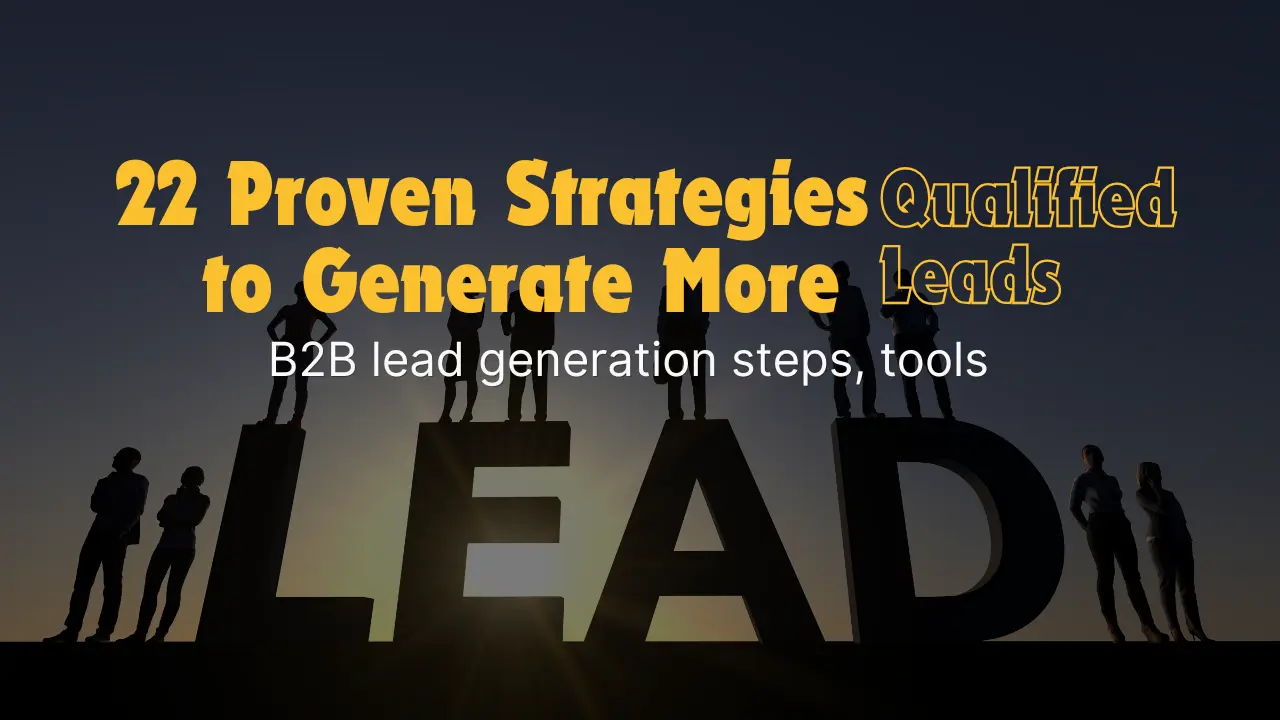
Quick Answer: What Is B2B Lead Generation?
LinkedIn lead generation helps businesses connect with decision-makers, build professional relationships, and generate qualified B2B leads. The most effective approach combines profile optimization, valuable content, personalized outreach, LinkedIn Sales Navigator, and consistent engagement with target prospects.
In today’s digital-first marketplace, buyers conduct detailed research before contacting a sales representative. Businesses that consistently for a competitive advantage by creating predictable revenue growth to generate B2B lead geneartion.
Table of Contents
What Is LinkedIn Lead Generation?
LinkedIn lead generation is the process of finding, attracting, and converting potential business customers through LinkedIn. Unlike Facebook or Instagram, LinkedIn is designed for professional networking, making it one of the most effective platforms for B2B marketing and sales.
Whether you’re a SaaS company, digital marketing agency, IT service provider, consultant, or startup founder, LinkedIn gives you direct access to the people who make buying decisions.
The biggest advantage is simple: you’re not interrupting people with ads. Instead, you’re building relationships with professionals who are already interested in growing their businesses.
If you’re new to lead generation, you may also want to read our guide on B2B Lead Generation, which explains the complete process of generating qualified business leads from multiple channels.
Why LinkedIn Is Best for Lead Generation
Think about where business conversations happen online.
When someone wants to watch entertainment, they open TikTok.
When they want to connect with friends, they open Facebook.
But when they want to discuss business, hire employees, explore partnerships, or find solutions to company problems, they open LinkedIn.
That’s why LinkedIn continues to be one of the most powerful platforms for B2B marketers.
Some of the biggest reasons include:
- Access to Decision-Makers: LinkedIn allows you to connect directly with: CEOs, Founders, Marketing Directors, HR Managers, Operations Leaders, Procurement Teams, Sales Managers
- Higher Quality Leads: LinkedIn users are generally in a professional mindset, which often results in more meaningful conversations and better conversion rates compared to many other social platforms.
- Trust-Based Selling: Modern buyers don’t want aggressive sales pitches. They want expertise. LinkedIn allows businesses to demonstrate knowledge before asking for a sale.
How to Generate B2B Leads on LinkedIn
One of the most asked questions by marketers is: How to generate B2B leads on LinkedIn?
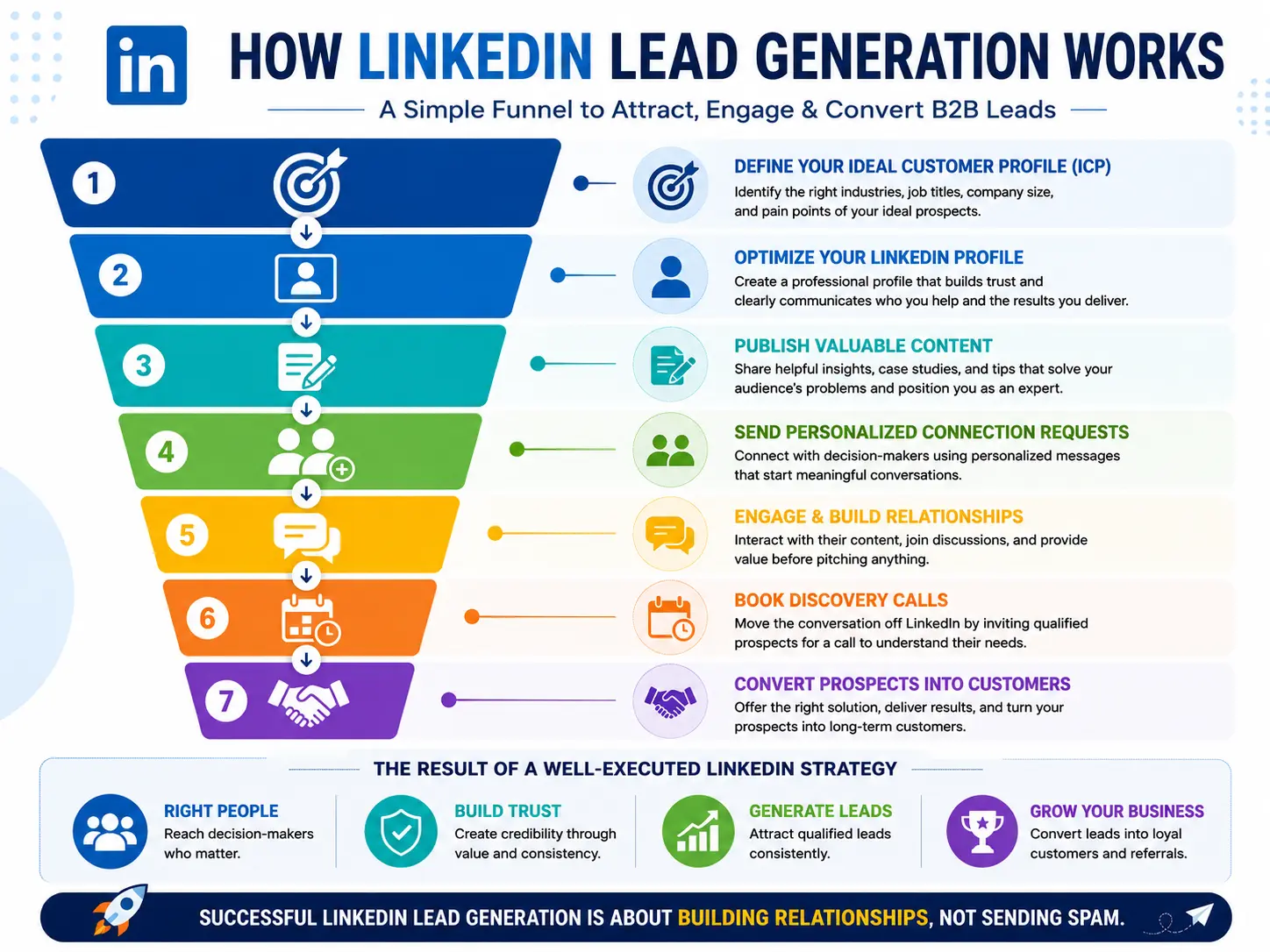
The answer isn’t simply sending hundreds of connection requests every day/week/month. The successful LinkedIn lead generation is about building trust, providing value, and starting meaningful conversations with the right people.
5 Steps to generate leads on LinkedIn are:
Step 1: Define Your Ideal Customer Profile (ICP)
Before sending random connection requests or publishing content, you need to know exactly who you’re trying to reach.
Ask Yourself These Questions:
- Which industry do they belong to?
- How many employees do they have?
- What challenges do they face?
- Who makes purchasing decisions?
- What services or products are they likely to need?
Trust me, the more you target your audience, the better your lead quality will be.
For example, if you’re running a digital marketing agency, your ideal customer might be:
- SaaS founders
- E-commerce business owners
- Startup CEOs
- Marketing managers
Step 2: Optimize Your LinkedIn Profile
Many LinkedIn businesses make the mistake of treating LinkedIn as a tool for job posting and online resumes.
Your profile should function more like a landing page.
When any clients visit your profile, they should immediately understand:
- Who you help
- What problem do you solve
- Why they should trust you
- Results you’ve achieved
- A clear call-to-action (CTA)
A strong headline might look like:
Helping B2B Companies Generate Qualified Leads Through SEO, Content Marketing, and LinkedIn Outreach.
Your About section should focus on client outcomes rather than job titles.
Step 3: Publish Valuable Content Consistently
Create content that addresses your audience’s problem with a solution.
Some content formats that perform exceptionally well include:
- Marketing strategies
- Industry insights
- Case studies
- Business lessons
- Case studies
- Industry insights
- Personal experiences
- Step-by-step guides
- Carousel posts
- Short videos
One effective strategy is to share lessons learned from real client projects.
For example:
“After helping a SaaS startup improve its lead generation process, we discovered that personalized LinkedIn outreach generated 3 times more responses than generic connection requests.”
Specific insights tend to outperform generic advice.
Step 4: Build Relationships Before Selling
Engage with prospects by:
- Commenting on posts
- Sharing insights
- Sending personalized connection requests
Just avoid pitching with the client immediately after building a connection.
Step 5: Move Conversations Off LinkedIn
The conversation with B2B clients isn’t just about noise and engagement. The goal is to move qualified prospects into:
- Discovery calls
- Consultations
- Product demos
- Sales conversations
When implemented correctly, this process becomes a highly effective B2B LinkedIn lead-generation strategy.
7 LinkedIn Lead Generation Strategies That Actually Work
1. Build Your Personal Brand
People buy from people they trust.
If your profile lacks credibility, even the best outreach campaign will struggle.
Focus on:
- Consistent posting
- Professional branding
- Sharing expertise
- Engaging with industry conversations
2. Use LinkedIn Sales Navigator
One of the most powerful prospecting tools available is LinkedIn Sales Navigator.
It allows you to filter prospects by:
- Job title
- Industry
- Company size
- Geography
- Seniority level
This makes it easier to find highly targeted leads.
You can learn more at: LinkedIn Sales
3. Personalize Every Connection Request
The fastest way to get ignored is to send generic messages.
Avoid:
“Hi, I’d like to connect.”
Instead, try:
“Hi [First Name], I noticed your company is growing rapidly in the SaaS space. I regularly share lead generation insights that may be valuable for your team. I’d love to connect. Regards, Ruby”
Personalization dramatically increases acceptance rates.
4. Engage Before You Pitch
One of the biggest mistakes marketers make is trying to sell immediately.
A better approach:
- Follow prospects
- Comment on their posts
- Share their content
- Participate in conversations
By the time you send a message, your name already feels familiar.
5. Use Lead Magnets
A lead magnet is something valuable offered in exchange for contact information.
Examples include:
- SEO audits
- Industry reports
- Templates
- Checklists
- Strategy guides
For example, you could offer:
Free B2B Lead Generation Checklist
This works particularly well when combined with LinkedIn content.
6. Publish Case Studies
Case studies provide proof.
Instead of saying:
“We help companies generate leads.”
Show:
“Here’s how we helped a client increase qualified leads by 127% in four months.”
Specific results create trust.
7. Combine LinkedIn with SEO
One mistake many businesses make is relying entirely on LinkedIn.
The best results usually come from combining LinkedIn with content marketing and SEO.
For example:
- Publish a blog post
- Share it on LinkedIn
- Engage with comments
- Capture leads through a landing page
This creates a sustainable lead generation system.
If you’re building a complete lead generation strategy, also read:
How to Generate B2B Leads Using SEO
LinkedIn Lead Generation B2B Strategy: A Simple Funnel
The most effective LinkedIn lead generation B2B process follows a 4-stage process:
| Stages | Activities |
|---|---|
| AWARENESS | – Posting content – Commenting on industry discussions – Growing your network |
| ENAGEMENT | – Direct messaging – Poll participation – Lead magnet offers – Event/webinars Programs |
| CONVERSION | – Discovery calls – Consultations – Product demonstrations – Free trials |
| RETENSION | – Customer success programs – Follow-up communication – Referral generation |
This 4-stage structured approach helps businesses generate predictable leads instead of relying on random networking.
Common LinkedIn Lead Generation Mistakes
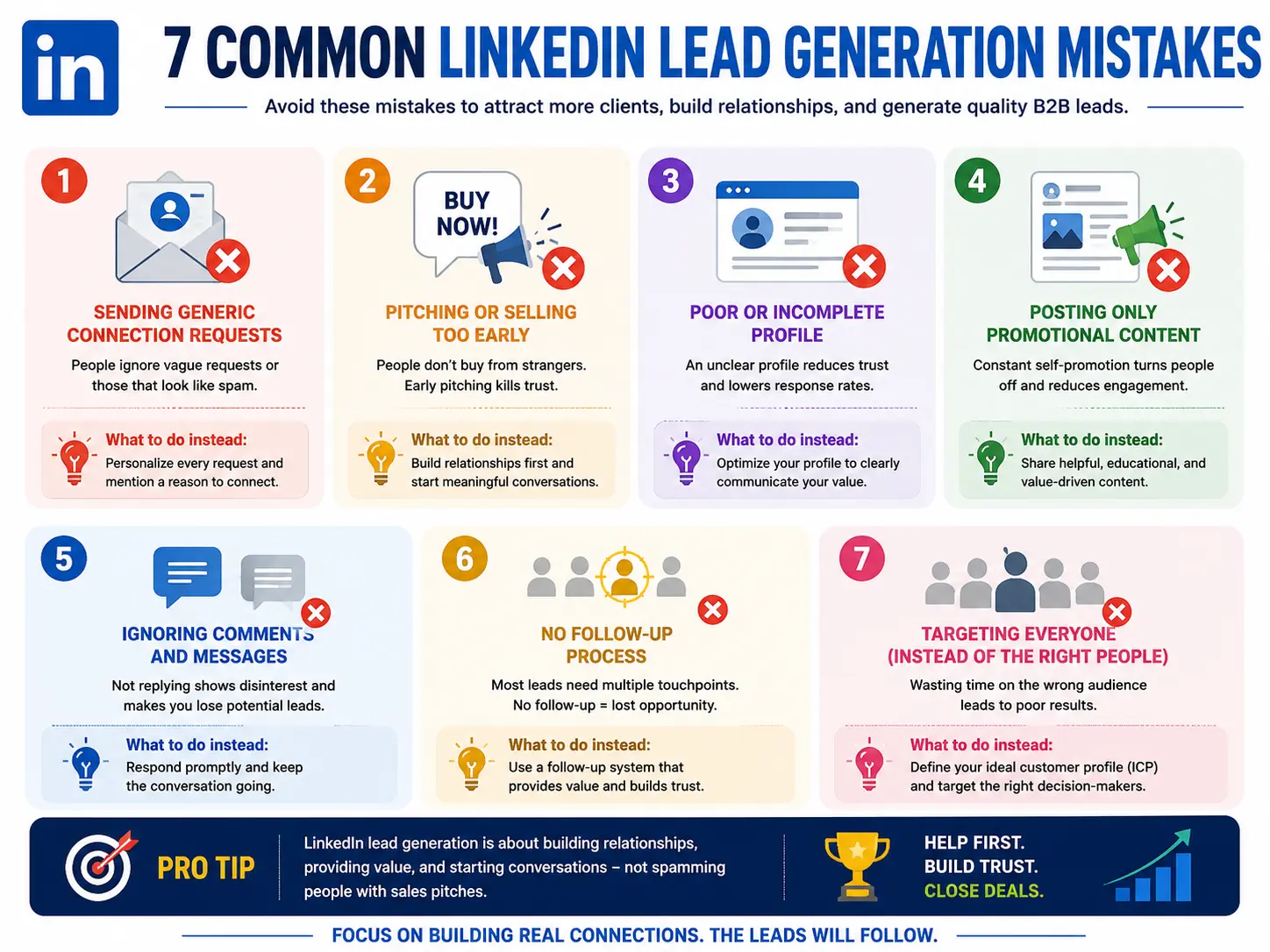
Sending Mass Messages
People can instantly recognize copy-paste outreach.
Focus on quality over quantity.
Ignoring Content
Many businesses spend all their time prospecting but never create content.
Content often does the selling before conversations even begin.
Poor Profile Optimization
An incomplete profile can reduce trust and response rates.
Selling Too Early
Relationships come before sales.
Focus on helping before pitching.
LinkedIn Lead Generation Service: Should You Outsource?
Many businesses eventually consider hiring a LinkedIn lead generation service.
A professional LinkedIn lead generation service can help with:
- Prospect research
- LinkedIn profile optimization
- Content creation
- Outreach campaigns
- Appointment setting
Outsourcing may be beneficial if:
- Your team lacks time
- You need faster pipeline growth
- You don’t have LinkedIn expertise internally
However, always evaluate providers carefully and avoid agencies that promise unrealistic results or rely heavily on spam outreach.
What Is the 5-3-2 Rule on LinkedIn?
The 5-3-2 rule is a popular LinkedIn engagement strategy designed to build relationships naturally.
For every 10 interactions:
- 5 Interactions: Engage with content from others. Examples:
- Like posts
- Leave thoughtful comments
- Share relevant insights
- 3 Interactions: Share content created by others while adding your own perspective.
- 2 Interactions: Publish original content. Examples:
- Case studies
- Industry insights
- Personal experiences
The goal of the 5-3-2 rule is to maintain a healthy balance between consuming, curating, and creating content.
What Is the 5-5-5 Rule for LinkedIn Success?
The 5-5-5 rule is a simple daily networking strategy.
Every day:
- Connect With 5 New People: Target decision-makers and ideal prospects.
- Engage With 5 Posts: Leave meaningful comments that contribute to conversations.
- Send 5 Personalized Messages: Focus on building relationships rather than selling.
Following this rule consistently can significantly expand your network and improve lead generation opportunities over time.
What Is the 4-1-1 Rule on LinkedIn?
The 4-1-1 rule on LinkedIn is a content marketing framework used by many successful marketers.
For every 6 posts:
- 4 Posts: Share educational or curated content.
- 1 Post: Share content from another trusted source.
- 1 Post: Promote your own service, offer, or content.
This approach prevents your audience from feeling like they’re constantly being sold to. Instead, you build trust by delivering value first.
FAQs of LinkedIn Lead Generation
How to generate B2B leads on LinkedIn?
To generate B2B leads on LinkedIn, start by defining your ideal customer profile, optimizing your profile, publishing helpful content, engaging with your target audience, and sending personalized connection requests. Consistent follow-ups and relationship-building are key to converting connections into qualified leads.
What is the best LinkedIn lead generation method?
The best LinkedIn lead generation method is a combination of content marketing, personalized outreach, and strategic networking. Businesses that consistently publish educational content and engage with prospects before pitching tend to generate better results than those relying solely on cold messages.
Why is LinkedIn effective for B2B lead generation?
LinkedIn is effective for B2B lead generation because it connects businesses directly with professionals and decision-makers. Unlike other social media platforms, users visit LinkedIn for networking, business growth, and industry insights, making it ideal for generating high-quality B2B leads.
How many LinkedIn connection requests should I send daily?
Quality is more important than quantity. Instead of sending hundreds of generic requests, focus on sending a manageable number of personalized invitations to relevant prospects. Building genuine relationships generally leads to better long-term results.
Can small businesses use LinkedIn for lead generation?
Yes. LinkedIn is an excellent platform for startups, agencies, consultants, and small businesses because it allows them to connect directly with decision-makers without needing a large advertising budget. A strong content strategy combined with personalized networking can generate consistent B2B leads.
What is LinkedIn Sales Navigator, and is it worth it?
LinkedIn Sales Navigator is a premium prospecting tool that helps businesses find and track qualified leads using advanced search filters. It can be especially valuable for B2B companies that regularly target specific industries, job titles, or company sizes.
How do I optimize my LinkedIn profile for lead generation?
Optimize your LinkedIn profile by using a professional photo, writing a benefit-driven headline, creating a compelling About section, highlighting your expertise, showcasing client results or testimonials, and including a clear call-to-action. Think of your LinkedIn profile as a landing page rather than a digital resume.
What are the best LinkedIn lead generation tools?
Some popular LinkedIn lead generation tools include LinkedIn Sales Navigator for prospecting, Apollo for lead databases, HubSpot CRM for lead management, Taplio for content planning, and Google Analytics for tracking website traffic from LinkedIn campaigns.
What mistakes should I avoid in LinkedIn lead generation?
Common mistakes include sending generic connection requests, pitching immediately after connecting, neglecting your profile, posting inconsistently, and focusing only on sales instead of relationship-building. The most successful LinkedIn users prioritize trust and long-term engagement.
How can I measure the success of my LinkedIn lead generation strategy?
Key metrics to track include profile views, connection acceptance rate, content engagement, website clicks, lead form submissions, meetings booked, and conversion rate. Regularly reviewing these metrics helps you refine your strategy and improve results over time.
What is the future of LinkedIn lead generation?
The future of LinkedIn lead generation will focus more on personal branding, AI-assisted prospecting, thought leadership content, and authentic relationship-building. Businesses that consistently provide value and build trust are likely to achieve the best long-term results on the platform.
- LinkedIn Lead Generation: The Complete Guide for Generating High-Quality Business Leads in 2026
- 22 Proven B2B Lead Generation Strategies for Nepal Businesses
- How to Use AI Tools for Your Marketing Strategy (Complete 2026 Guide)
- Top 10 List of FMCG Companies in Nepal (2026 Updated)

![[2026 Updated] Top 10 Digital Marketing Agencies in Nepal Ranked!](https://mysticrubs.com/wp-content/uploads/2022/05/top-10-digital-marketing-company-in-nepal.png)